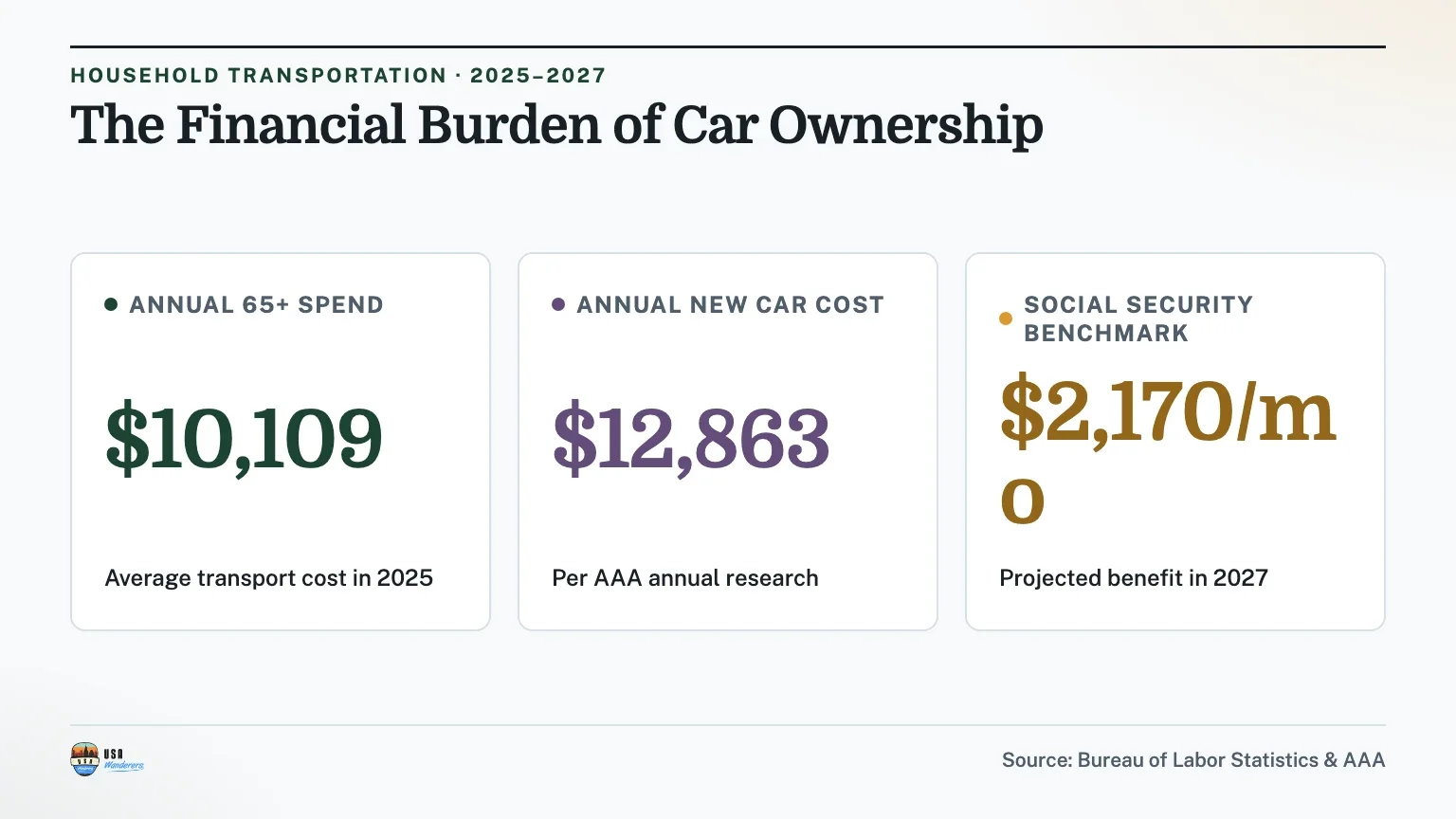
Selling your vehicle can immediately free up thousands of dollars in your retirement budget. According to annual research from AAA, owning and operating a new car averages $12,863 each year.
Ditching the keys eliminates parking hassles, steep insurance premiums, and unpredictable maintenance costs. You can redirect that substantial cash flow toward housing, dining, and senior travel.
A recent real estate roundup highlighted seven U.S. destinations where retirees can navigate daily life without a car. Here is how their public transit networks, walkability, and housing markets actually stack up.
The Financial Case for Retiring Without a Car
Transportation represents one of the largest budget drains for older Americans. According to the Bureau of Labor Statistics, households led by adults age 65 or older spent an average of $10,109 on transportation in 2025.
Eliminating auto expenses helps protect your fixed income from unexpected repair spikes. That extra margin proves especially helpful as the average Social Security benefit adjusts to $2,170 per month in 2027.
1. Philadelphia, Pennsylvania
Philadelphia combines big-city transit infrastructure with approachable East Coast housing prices. Redfin reported a median home sale price of $275,000 across the city in late 2026.
Center City and surrounding neighborhoods offer flat, grid-based streets lined with local grocery markets and pharmacies. You can reach most daily amenities within a ten-minute walk.
Best of all, Pennsylvania residents age 65 and older ride free on SEPTA buses, subways, and trolleys with a Senior Key Card funded by the state lottery.
2. San Francisco, California
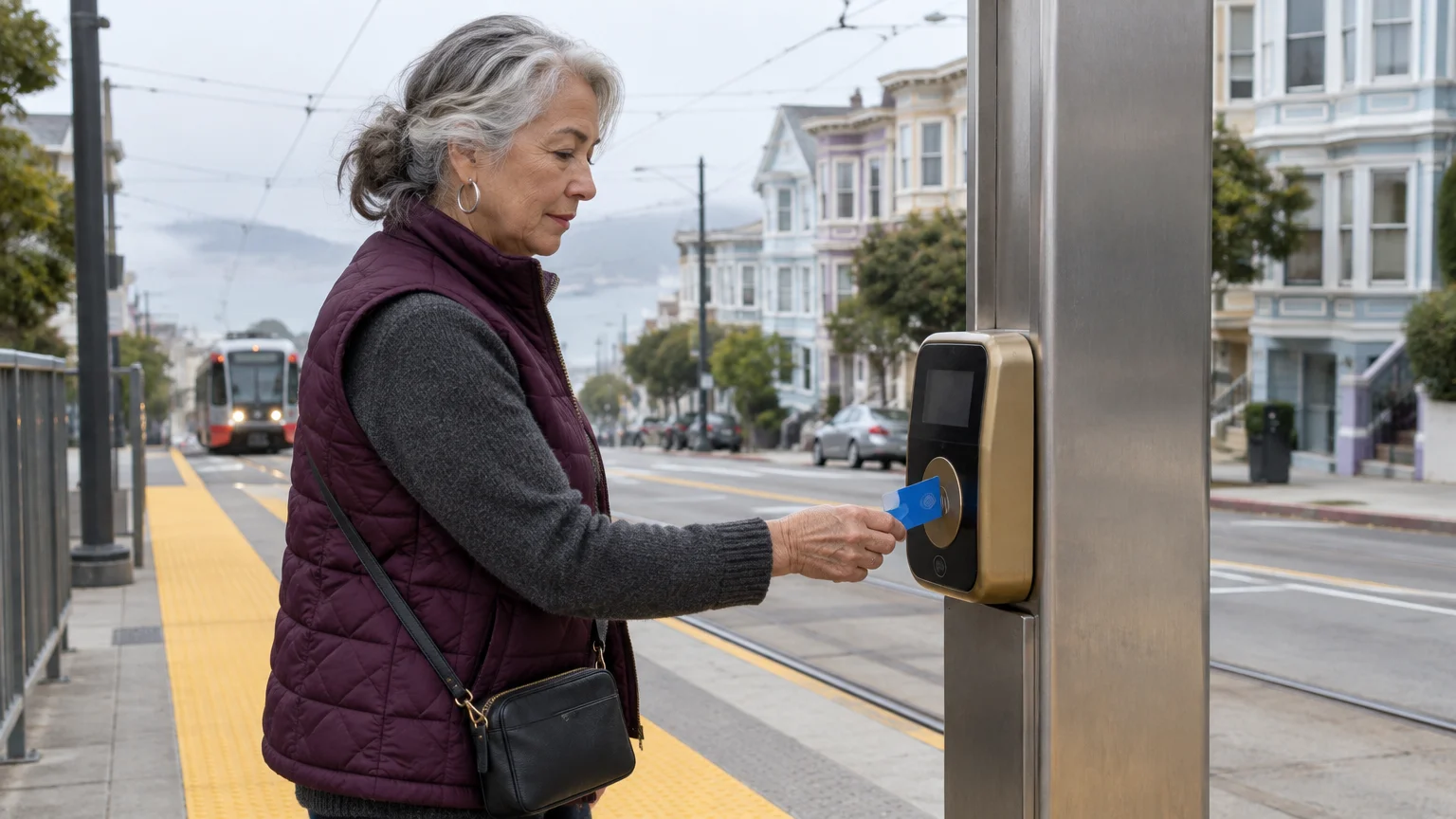
San Francisco ranks as the most walkable major city in the United States, earning an 88.7 Walk Score and a 77.1 Transit Score. Compact neighborhoods make running daily errands effortless on foot.
Seniors age 65 and older pay just $1.40 per ride on Muni using a Clipper card. Eligible low-income older adults can even ride the entire transit network for free.
However, overall living costs run 64% above the national average. The city’s famous hills can also present mobility challenges for some retirees.
3. New York, New York
New York City features the nation’s premier public transit network, boasting an 88.6 Transit Score. Approximately 55% of local households live entirely without a car.
Subway lines, crosstown buses, medical practices, and grocery stores sit within footsteps of residential buildings. You never have to battle highway traffic to reach top-tier healthcare.
The primary hurdle is the steep cost of entry. Elevated purchase prices and high monthly rents require retirees to maintain a substantial housing allocation.
4. Boston, Massachusetts
Boston pairs rich historical character with an 82.8 Walk Score and a 72.4 Transit Score. Classic neighborhoods such as Beacon Hill, Back Bay, and the South End function like pedestrian-first European quarters.
The MBTA train and bus network provides direct connections to world-class medical facilities, including Massachusetts General Hospital.
Housing remains competitive, with the citywide median home sale price reaching $873,000 in late 2026. Furthermore, surrounding outer suburbs quickly become auto-reliant.
5. Seattle, Washington
Seattle earned a 74.4 Walk Score and a 59.6 Transit Score, offering strong urban transit in the Pacific Northwest. Neighborhoods like Capitol Hill and Downtown feature reliable light rail and streetcar access.
Sound Transit Link light rail delivers stress-free connections between neighborhood hubs, major medical districts, and the international airport.
Slick winter rain requires good footwear and waterproof gear. Seattle’s real estate prices also demand careful long-term financial planning.
6. Miami, Florida
Miami maintains an overall Walk Score of 76.6, but a successful car-free retirement depends heavily on your choice of neighborhood. Dense urban districts like Brickell, Downtown, and South Beach offer walkable coastal living.
The free Metromover automated train loops through the commercial core, while municipal trolleys link popular retail corridors. Florida also levies no state personal income tax.
Venturing past the downtown core requires on-demand rideshares, as suburban Miami sprawls significantly. Intense summer heat can also restrict midday walking for seniors.

7. New Orleans, Louisiana
New Orleans records a citywide Walk Score of 58 and a Transit Score of 44, making car-free living specific to historic districts. The French Quarter, Marigny, and Central Business District offer unmatched pedestrian vitality.
Historic streetcars travel along St. Charles Avenue and Canal Street for just $1.25 per ride. You can easily walk to pharmacies, produce stalls, and neighborhood cafes.
Historic real estate comes with a premium; French Quarter homes averaged $500,292 in late 2026. Property insurance rates also represent an important budget factor.
Comparing the 7 Car-Free Retirement Cities
While real estate experts highlight these cities for transit and walkability, their costs and transit systems differ significantly. Review the breakdown below to compare your options.
| City | Walk Score | Transit Score | Housing Cost Snapshot | Key Senior Transit Feature |
|---|---|---|---|---|
| San Francisco, CA | 88.7 | 77.1 | High (64% above national average) | $1.40 Muni senior fare; free for qualifying low incomes |
| New York, NY | 88.0 | 88.6 | Very High (premium housing costs) | Half-fare MetroCard/OMNY for riders 65+ |
| Boston, MA | 82.8 | 72.4 | High ($873,000 median sale price) | Reduced senior fares on MBTA subway and buses |
| Miami, FL | 76.6 | Moderate (core) | Moderate to High (neighborhood dependent) | Free Metromover automated downtown transit |
| Philadelphia, PA | 74.8 | 67.0 | Affordable ($275,000 median sale price) | 100% free SEPTA transit with PA Senior Key Card |
| Seattle, WA | 74.4 | 59.6 | High (competitive urban market) | Regional Reduced Fare Permit for seniors |
| New Orleans, LA | 58.0 (citywide) | 44.0 (citywide) | Moderate to High ($500,292 French Quarter avg) | $1.25 flat-rate historic streetcar network |
Worth Keeping in Mind
Relocating to walkable US towns requires balancing car savings against local housing and living realities. Consider these crucial factors before selling your vehicle.
- Micro-neighborhood boundaries: Cities like Miami and New Orleans are walkable only inside concentrated perimeters. Moving even two miles away often reintroduces car dependence.
- Housing price trade-offs: Saving $1,000 each month on a vehicle will not offset a $2,000 spike in monthly rent or mortgage costs in expensive markets like Boston or San Francisco.
- Topography and weather risks: Winter ice in New York or Boston and steep hills in San Francisco can elevate slip-and-fall hazards for seniors.
- Healthcare line access: Confirm that your preferred specialists sit along direct bus or rail lines so you avoid costly rideshare trips.
Transit Tips for Senior Travel and Everyday Savings
Taking advantage of regional discount programs stretches your retirement funds much further. Secure your local senior transit card as soon as you settle into a new city.
When traveling across state lines, Amtrak provides a 10% rail fare discount for passengers age 65 and older on most domestic routes.
Pennsylvania offers one of the most generous transit benefits nationwide. Residents age 65 and older ride local transit completely free of charge simply by presenting a state-issued Senior Key Card.
Frequently Asked Questions
Which car-free city is the most affordable for retirees?
Philadelphia offers the best combination of affordability and transit, featuring a $275,000 median home price and free transit for seniors.
Can you live completely car-free in Miami or New Orleans?
Yes, but you must live within dense core districts like the French Quarter or Miami’s Brickell neighborhood.
How much money can you save by retiring without a vehicle?
Households led by adults 65 and older spend an average of $10,109 annually on vehicle costs, all of which can be redirected toward other goals.
Retiring without a car fosters physical vitality, social connection, and substantial financial freedom. Focus your search on compact urban pockets where grocery stores, medical centers, and reliable transit stops sit comfortably within your personal walking radius.
This article provides general information only. Every reader’s situation is different—what works for others may not be the right fit for you. For personalized guidance on health, legal, or financial matters, consult a qualified professional.
Last updated: November 2026. Rules, prices, and details change—verify current information with official sources before acting on it.